The SBIR program has restarted.
Agencies are accepting proposals again — and competition will be fierce.


- 30-Day Cohort · For Funded Startups
The R&D Plan Is What Reviewers Use to Score Your Technical Merit. Build It Right.
A strong innovation is not enough to win SBIR funding. Reviewers need to see a clear, credible R&D plan — one that defines the scope of your technical work, breaks it into measurable milestones, accounts for real development risks, and demonstrates that your team has a realistic path from concept to validated prototype.
$999
$649
Build the technical backbone of your SBIR proposal — and your business.
9
Chapters
11
Lessons
25 yrs
NSF Review
Built by a Ph.D. engineer
25+ years of R&D experience across pharmaceuticals, semiconductors, and advanced energy systems.
- The Program
A program designed around
your outcome.
You will build a complete, reviewer-ready SBIR proposal — not just an outline, not just notes. A real, submittable document, built section by section.

Lessons
Daily lessons with clear assignments — one manageable step at a time, designed to work alongside a full schedule.
Day-by-day
Frameworks
Templates for every major proposal section so you start from a proven structure instead of a blank page.
Templates

Guidance
Individual feedback on assignments and pre-recorded video instruction from a former federal grant reviewer.
Feedback
- Why Proposals Fail
Where Most R&D Plans Break Down
After reviewing hundreds of NSF, DOE, and NIH SBIR proposals and advising 175+ deep-tech startups, I have seen the same R&D plan failures repeat across every industry and technology type:
The scope is too broad — it reads like a research agenda, not a development plan
The milestones are vague — complete prototype development is not a milestone reviewers can score
The feasibility analysis is missing — there is no evidence the team has considered what could go wrong
The budget does not map to the technical work — reviewers cannot connect the costs to the plan
The team section does not establish that anyone on the team has done this before
The plan ends at prototype — there is no connection to commercialization or scale
An R&D plan that fails on any of these dimensions costs you points on technical merit — which is the section where most technical founders expect to score highest. This program closes every one of those gaps.
- Trust & Track Record
Join 150+ companies from some of the top startups in the U.S.
175+
Deep-tech startups advised
400+
Founders across 10 industries
15 yrs
Reviewing NSF, DOE, NIH proposals
- Curriculum
Nine focused modules.One
complete R&D plan
9 chapters · daily assignments · worksheets · templates · individual feedback.
CH 01
Defining the Scope of Your High-Tech Product
Clarify exactly what you are building and who it is for — before investing time, money, or team resources in the wrong direction.
CH 02
Product Design — From Vision to First Blueprint
Translate your concept into tangible form. Learn the core principles of initial design, how to define technical requirements, and the most common mistakes that derail early-stage product development.
CH 03
Building a Technical Team
Structure the right team from the start. Identify the skills you need, fill critical gaps, and build a founding team that can execute your technical roadmap.
CH 04
Building the Prototype — From Concept to Reality
Move from idea to working prototype. Covers software, hardware, mathematical modeling, and integrated device prototyping — with practical guidance on what to build first and how.
CH 05
R&D Milestones and Budgeting
Build a milestone-driven R&D plan with a realistic budget behind it. Learn how to structure your development roadmap to build credibility with investors and grant reviewers alike.
CH 06
Testing and Validation of Your Prototype
Go beyond basic testing. Develop a comprehensive validation strategy that demonstrates your technology works — and that you understand the difference between a lab result and a market-ready product.
CH 07
Regulatory Planning and Intellectual Property Strategy
Protect your innovation and navigate your regulatory pathway before they become expensive surprises. Build an IP strategy and regulatory roadmap integrated directly into your development plan.
CH 08
Manufacturing for Startup Entrepreneurs
Make the critical decisions about how your product gets built at scale. In-house vs. contract manufacturing, supplier selection, materials strategy, and how to prototype with scale already in mind.
CH 09
Writing Your R&D Plan for Grant Applications
Put it all together into a fundable R&D plan. Learn the essential elements reviewers look for, how to write go/no-go milestones, and how to present a timeline that builds reviewer confidence.
- The Process
A focused, six-part delivery model.
01
Daily Lessons & Assignments
Follow a clear step-by-step learning path with manageable lessons and assignments, covering one key component at a time.
02
Interactive Quizzes
Reinforce your understanding with quizzes designed to help you apply and retain important concepts.
03
R&D Plan Templates
Use ready-to-customize templates for every major section of your R&D plan to save time and stay organized.
04
Video Walkthroughs
Learn through pre-recorded video instruction from Dr. Spiegel, guiding you through each important concept.
05
Personalized Feedback
Receive individual feedback on your assignments to improve your work and move forward with confidence.
06
Built for Technical Founders
Designed specifically for technical founders, focusing on engineering and scientific rigor instead of generic business advice.
A milestone-driven development timeline that reviewers can evaluate and score
A realistic R&D budget tied directly to your technical plan
A technical team strategy that establishes credibility and fills execution gaps
A prototyping and testing protocol with defined iteration cycles
A regulatory and IP strategy appropriate for your technology and target market
A written R&D plan narrative ready for grant submission, investor review, or internal planning
- What You Will Build
In 30 days, you finish with a complete, reviewer-ready proposal.
A complete, grant-ready R&D plan — structured for SBIR and STTR submissions to NSF, NIH, DOE, and other federal agencies — built section by section with guided instruction, templates, and feedback at every stage.
A clearly defined product scope with technical objectives and measurable success criteria
A market and technology research summary that aligns your development with real market needs
A milestone-driven development timeline that reviewers can evaluate and score
- Testimonials
Trusted by founders, scientists, and innovation leaders.
"Colleen provides valuable, constructive feedback. I would definitely use her again and would not hesitate to recommend her."
Shero
"A deep expert, always available to provide guidance, and committed to her client's success. I highly recommend Colleen."
Restore Technology
"Colleen was amazing to work with. She was very supportive of my ideas and business. Invaluable!"
StructureBot
"Her expertise makes her well-suited to provide realistic counsel and helpful guidance. I'll definitely be working with her again."
Fafnir
"Colleen was so great to work with. She just got it and was proactive about making suggestions."
Radiant Labs
"I had a great experience working with Colleen. Extremely knowledgeable and very easy to work with."
OpticSurg
- Your Instructor
A practitioner who has navigated the federal funding ecosystem firsthand.
Dr. Colleen Spiegel, Ph.D. — Founder of Semscio, engineer, grant reviewer, and startup advisor. 15 years reviewing NSF, DOE, and NIH SBIR proposals. Founder of Clean Fuel Cell Energy, a profitable deep-tech manufacturer. Author of technical books with McGraw-Hill and Elsevier.
“I built this program because most grant writing resources are written by people who have never sat on a review panel. This one was not.”
175+
Startups
15 yrs
Reviewing
Ph.D.
Engineering
- Enrollment Open
Everything you need to build a fundable R&D plan in 30 days.
Learn the system used by a Ph.D. engineer and grant reviewer who has advised 175+ deep-tech startups — and knows what separates a credible R&D plan from one that loses funding.
- 9 chapters . Daily lessons
- Pre-recorded video instruction
- Self-paced — fits a full schedule
- Worksheets and templates for every stage of development
- Individual feedback on assignments
- Investor and grant-ready R&D plan by day 30
30-Day R&D Plan Challenge
$1,495
Founders rate: $649 $999 · Limited cohort
- 30-day reviewer-ready guarantee
Pick the path that fits where you are now.
- Start Free
Free Founder System
$0
11 free ebooks covering decisions, strategy, execution, and grant proposal structure.
- Self-paced
The Book
From $29
- Most popular
30-Day Challenge
$649
Daily lessons, templates, video instruction, and individual feedback on your proposal.
- The Book Behind the Program
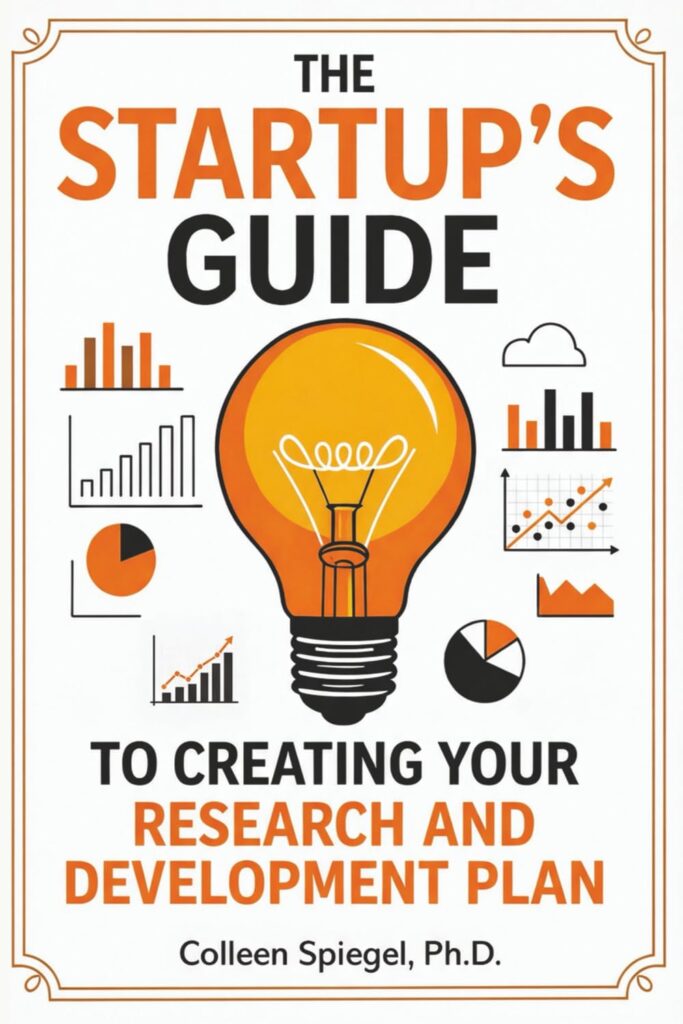
The Startup's Guide to Creating Your Research and Development Plan
A step-by-step manual for founders, engineers, and scientists who need to translate complex technical ideas into a clear, credible R&D plan for grant proposals, investor review, and internal execution. Read it first if you are not yet ready to commit to the full program.
- Right Fit
Is this program right for you?
This program is for you if…
- You are preparing an SBIR or STTR proposal and need a technically rigorous, reviewer-ready R&D plan
- You have a strong technical idea but have never structured it into a formal development plan with milestones, deliverables, and a mapped budget
- You want to understand what reviewers actually score in the technical merit section — and build your plan to those criteria
- You are building a deep-tech company and need an R&D plan that guides your actual development work, not just satisfies a grant requirement
- You want to produce a plan that works for grant submissions, investor conversations, and internal team alignment
- You want to complete your plan in a structured, accountable format — not circle back to it indefinitely while your submission deadline approaches
This program is not for you if…
- You are looking for someone to write your R&D plan for you (see Advisory services)
- You have not yet defined your core technical problem or product concept
- You are not willing to commit 30 days of focused effort
- FAQ
Frequently asked questions
How is an R&D plan different from a business plan or commercialization plan?
A business plan describes your overall business strategy. A commercialization plan describes your path to market. An R&D plan describes how you will develop and validate your technology — the specific technical work, milestones, testing protocols, team, budget, and timeline required to move from your current state to a validated product or prototype. For SBIR applications, all three are required — and each is evaluated separately.
What agencies is this R&D plan structured for?
The program is structured around the R&D plan requirements for NSF, NIH, and DOE SBIR and STTR submissions. The framework also applies to DOD, NASA, and other participating agencies. Each agency has slightly different formatting requirements, and the program covers how to adapt your plan accordingly.
Do I need an advanced technical background to take this course?
You need to have a technical concept you are developing — but the program is designed for founders, not academic researchers. Every framework is practical and oriented toward building a fundable plan, not writing a journal article.
Can the R&D plan I build in this course be used for investor conversations as well?
Yes. A well-structured R&D plan gives investors exactly what they need to evaluate technical risk — defined milestones, a credible budget, a testing protocol, and a team that can execute. Many founders use the plan they build in this program for both grant applications and early-stage investor due diligence.
How does this course relate to the 30-Day Grant Writing Challenge?
The 30-Day Grant Writing Challenge covers your complete SBIR Phase I proposal — including the R&D plan as one section among several. This course goes deeper on the R&D plan specifically, with more detailed instruction, more templates, and more individual feedback. If you are preparing a Phase I proposal and want comprehensive coverage of every section, start with the Grant Writing Challenge. If your R&D plan is the section you most need to strengthen — or if you are building a standalone R&D plan for internal use or investor review — start here.
Is there a book I can read before enrolling?
Yes. The course is built on The Startup’s Guide to Creating Your Research and Development Plan by Dr. Spiegel, available on Amazon and as a digital download.
What if I need more than a course?
Advisory services are available for founders who want expert review of their completed R&D plan or direct guidance at a critical stage.
What if I am not sure I am ready yet?
Start with the Free Founder System — 11 free ebooks covering business selection, commercialization planning, R&D strategy, grant proposal structure, and what federal reviewers actually look for. It will help you assess your readiness and identify what to work on first, at no cost.
- Ready to Begin?
Ready to build a credible, fundable R&D plan?
A strong R&D plan is the foundation of every winning grant proposal, every investor conversation, and every successful product launch. The founders who build it now are the ones who move faster when funding opportunities open — and reviewers start reading.
- Free Resource
Not Ready to Enroll Today?
Free Founder System — 11 Free Ebooks. Instant Delivery. No Credit Card.
Start with the library that makes the rest of the journey easier.
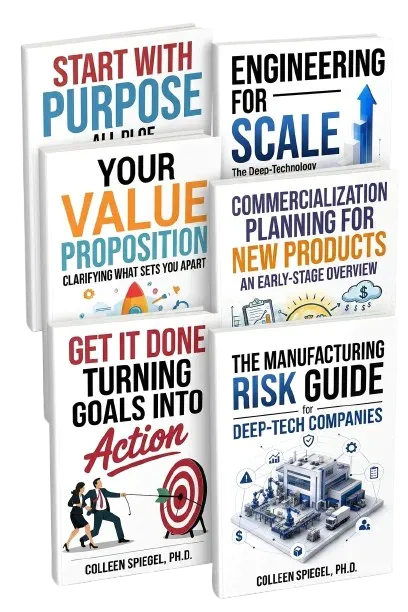
If you are not ready to commit to the full program, start here. The Free Founder System is a library of 11 structured ebooks for technical founders who want to make clearer decisions — on which business to build, how to grow it, and whether to pursue funding.
Free, instant delivery. No credit card.
- What's inside
The library covers the full founder journey
01
- 3 books
Decision-Making
Three books to help you evaluate your readiness, sequence your decisions, and choose the right path before committing time or capital.
02
- 3 books
Strategy
Three books on commercialization planning, value proposition development, and aligning your mission and goals — the same strategic foundations that make an R&D plan credible to reviewers and investors.
03
- 2 books
Execution
Two books on turning plans into action and preparing your technology for manufacturing scale — the operational context your R&D plan needs to feel real.
04
- 3 books
Risk & Funding
Three books on manufacturing risk, pre-acquisition engineering, and winning grant proposals — including how to secure non-dilutive funding without leaving money on the table.
Trusted by 400+ founders across 10 industries.
Free, instant delivery to your inbox. No pitch calls. Unsubscribe any time.
No hype. No fluff. Built for serious builders